
Why One 50 Cent Coin Defies the Entire Value Chart
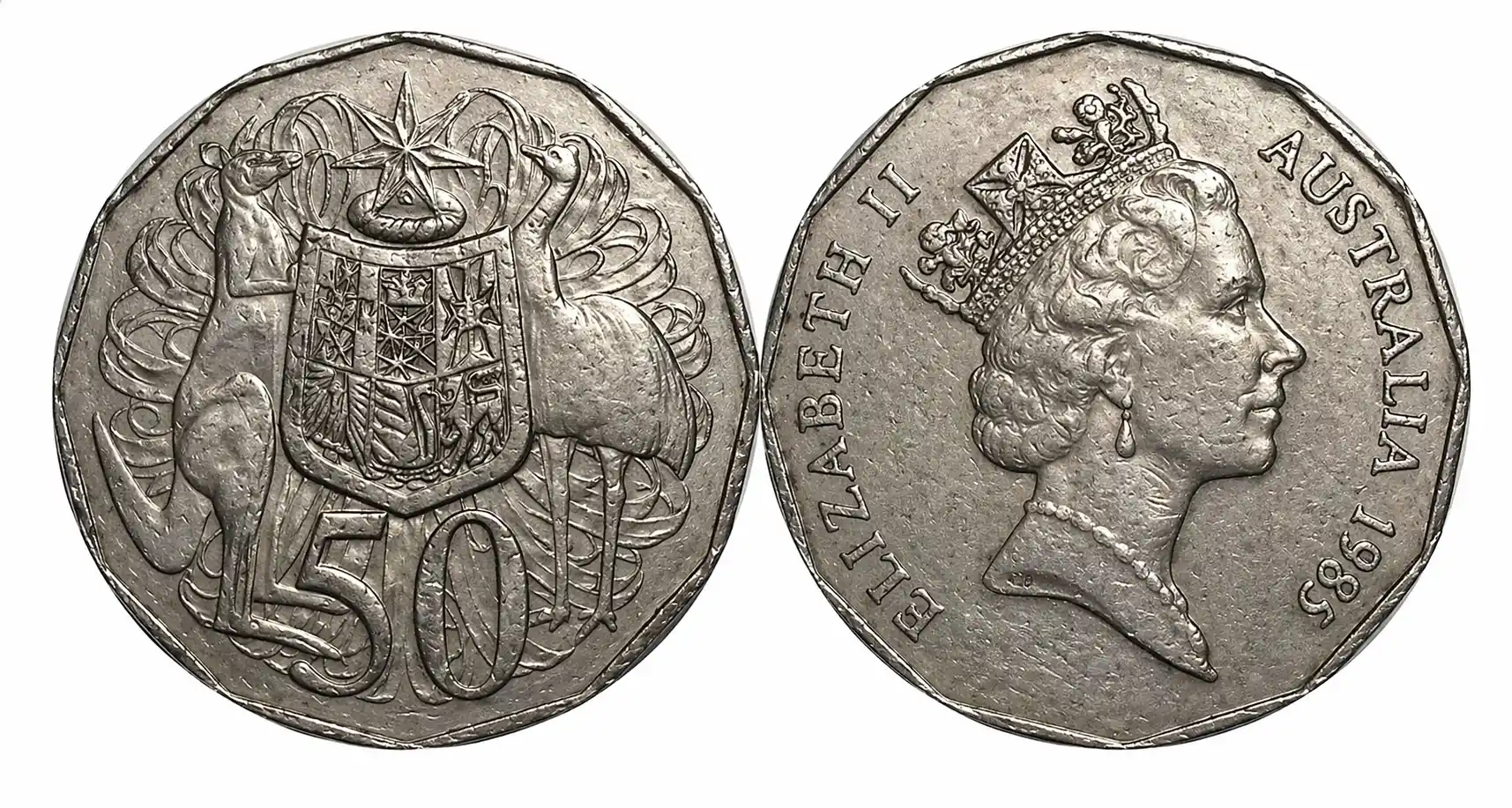
Exceptions reveal more about the market than averages ever will.
Market values for most 50-cent coins follow a strict correlation between mintage figures and preservation states.
Objects ignoring these established rules exist due to technical anomalies within the production cycle.
Statistical models in 2026 confirm the presence of individual lots with prices exceeding average indicators by tens of thousands of times.
Studying such 50 cent coin value chart allows for a deeper understanding of ultra-high liquidity formation.
Property | 1964-1970 Value | 1971-Present Value |
Face Value | $0.50 | $0.50 |
Total Weight | 11.500 grams | 11.340 grams |
Diameter | 30.61 mm | 30.61 mm |
Thickness | 2.15 mm | 2.15 mm |
Composition | 40% Silver | Copper and Nickel |
Verifying these weight parameters requires using jewelry scales accurate to one-thousandth of a gram.
Deviations from the standard weight often signal the use of an incorrect metal blank.
→ Using a 25-cent blank → Weight reduction → Unique defect → Price surge
Case Study: 1964 Kennedy Half Dollar Special Mint Set
This specific coin stands as the primary exception in the modern numismatic market.
Official Mint reports from 1964 contain no confirmation of its existence.
Distinguishing Features of the 1964 SMS:
Unusually sharp strike of portrait details
Satin-like surface finish without mirrored luster
Complete absence of contact marks or circulation wear
Sharp edges on letters and date digits
Experts suggest the production of only a few dozen specimens as experimental samples.
Realized prices for such a lot reached $156,000.00 in 2019.
Estimated values for this coin type rose by 18% by 2026 due to extreme scarcity.
Comparative Analysis of Pricing Deviations
Standard price charts fail to account for the individual history of specific die pairings.
Observe the massive gap between common issues and anomalous releases.
Coin Type | Grade | Average Price | Anomaly Price |
1964 P Kennedy | MS67 | $500.00 | $156,000.00 (SMS) |
1970 D Kennedy | MS65 | $45.00 | $3,500.00 (No Luster) |
1943 S Walking Liberty | MS67 | $1,200.00 | $18,500.00 (Full Details) |
Absence of this type from official sets of that era explains the $156,000.00 valuation.
Market participants react to information deficits by increasing speculative interest.
Minting Errors as Value Drivers
Technical failures during the striking process create objects without parallels in value tables.
Classification of errors became more rigid in 2026 thanks to high-resolution digital scanning.
Off-Center Strike: shifting the image by more than 50%
Values for such coins start at $1,500.00 if the date remains visible.
Double Denomination: striking 50 cents over a different coin
A lot struck on a 5-cent blank can reach a price of $12,000.00.
Wrong Planchet: using Gold or Silver blanks from previous years
Mistakenly using a Silver blank in 1971 creates a rarity priced at $8,000.00.
Die Cap: a coin sticking to the press and deforming subsequent blanks
Prices vary from $500.00 to $4,500.00 depending on the level of deformation.
Documenting every error in specialized evaluation service registries is mandatory.
Lacking a certificate of authenticity makes such items illiquid.
Impact of the Upper Grading Scale
Using the 70-point Sheldon scale determines the financial fate of any lot.
Small gaps between 69 and 70 points often represent hundreds of percent in value.
→ MS69 → Visual perfection → High registry availability → $150.00
→ MS70 → Absolute absence of micro-defects → Registry uniqueness → $12,000.00
Statistics for 2026 show a decrease in the number of highest scores assigned.
Using a coin value checker for surface checks caused this shift.
Investors target grade 70 coins specifically to protect capital against inflation.
Auction Record Dynamics Over 10 Years
Prices for exceptional coins demonstrate independence from general market trends.
Analyzing sales at major auction houses reveals consistent growth.
Year | Specimen | Realized Price | Growth vs Previous Sale |
2016 | 1964 SMS MS67 | $108,000.00 | +12% |
2019 | 1964 SMS MS67 | $156,000.00 | +44% |
2023 | 1964 SMS MS68 | $164,000.00 | +5% |
2026 | 1964 SMS MS68 | $192,000.00 | +17% |
Slowing growth in 2023 was followed by a sharp spike in 2026.
Market experts attribute this to a reduction in open-market offerings.
Rarity owners increasingly prefer private, closed-door transactions.
The "Full Bell Lines" Factor for Franklin Series
Franklin 50-cent coins require a specific criterion for peak valuation.
Presence of complete horizontal lines on the Liberty Bell is critically important.
Full Bell Lines (FBL) Requirements:
No breaks in any of the six lines
Crisp engraving detail at the bottom of the bell
Minimum count of surface scratches
A 1953 S Franklin without FBL in MS65 condition costs roughly $40.00.
Finding the same coin with a confirmed FBL status raises the value to $16,000.00.
Poor striking quality at the San Francisco Mint that year explains the 400x price difference.
Locating a high-quality strike defies the logic of any standard price table.
Rare coins serve as an alternative currency in 2026.
Inflationary pressure forces large capital holders to diversify portfolios.
Rising demand for physical assets: +22%
Annual influx of new market participants: +9%
Digitization of collections using blockchain certificates
A 1964 Silver 50-cent coin has a base metal value of $9.00.
Numismatic premiums for rare types make the metal component insignificant.
Rarities priced above $50,000.00 do not correlate with precious metal prices.
Auction demand alone determines their final market worth.
Logistics and Safety for High-Value Realization
Selling a coin that breaks the value chart requires special precautions.
Excluding standard postal services for such objects is a requirement.
→ Transferring lot to auction house → Professional photography → Full-value insurance → Bidding
Insurance fees for transporting a $100,000.00 lot average around $1,500.00.
Working with authorized dealers ensures the legal integrity of the deal.
Cases of counterfeit grading certificates increased in 2026.
Verifying the registry number via official mobile apps is a mandatory step.
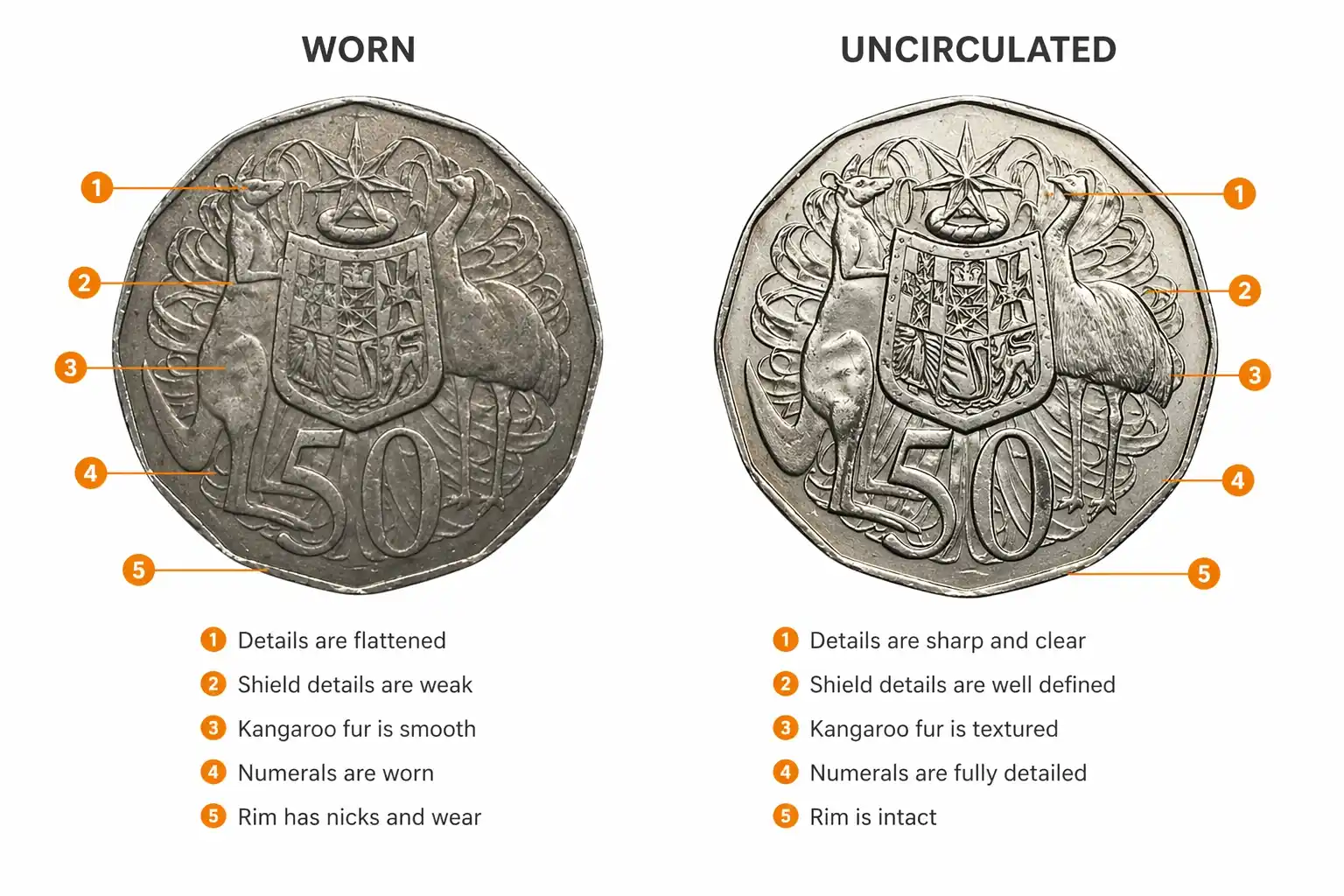
Role of "Proof" Strikes in Creating Exceptions
Proof quality coins are produced for collector sets.
Minting involves using polished blanks and special dies.
Deep Cameo effects hold the highest value in 2026.
Deep Cameo (DCAM) Characteristics:
Intense contrast between frosted relief and mirrored fields
Complete absence of polish lines on open surfaces
Clarity in every detail of the image
A 1950 Proof Franklin in average condition costs $500.00.
Reaching grade PR67 DCAM pushes the price to $25,000.00 for the same coin.
Scarcity in maintaining mirrored luster over decades creates a high premium.
Edge Errors: The Forgotten Detail
Five-cent coins must possess a reeded edge.
Rare instances occur where coins leave the press with a smooth edge.
Malfunctioning collar rings during the striking process cause this.
Edge Error Type | Scarcity | 2026 Evaluation |
Broadstrike (flat edge) | High | $150.00 — $400.00 |
Partial Collar (stepped) | Medium | $50.00 — $120.00 |
Smooth Edge (no reeds) | Exceptional | $800.00 — $2,500.00 |
Smooth edges on a 2004 issue are valued higher than on a 1971 issue.
Improved quality control at mints in the 21st century explains this gap.
Finer technologies make their failures significantly more expensive.
Psychological Aspects of Price Records
Desire for unique objects often drives the numismatic market.
Owning the only specimen in a PCGS registry triggers bidding wars.
Buyers in 2026 show readiness to pay premiums for "Top Pop" status.
This status indicates that no better coin exists in the world.
Adding a second coin with the same grade to the registry immediately drops the price of the first by 30%.
Risk of discovering new specimens remains the primary limiting factor.
Methodology for Finding Anomalies in Standard Sets
Searching bank rolls or old albums often leads to the discovery of exceptions.
Success requires an reference specimen for comparison.
Using free coin apps to find Double Dies
Weighing every specimen to locate Wrong Planchets
Checking the edge at an angle to identify collar defects
Neural networks designed for smartphone photo analysis appeared in 2026.
Accuracy in identifying rare types via AI has reached 94%.
This triggered a new wave of discoveries in 1970-1990 coinage segments.