
Mint Marks That Affect 1940 Wheat Penny Value
The one-cent coin issued in 1940, belonging to the series featuring Victor Brenner's design (Wheat Ears), is characterized by significant 1940 Wheat Penny value price variations depending on the place of mintage.
This coin type was manufactured from an alloy containing 95% copper, and 5% tin, and zinc.
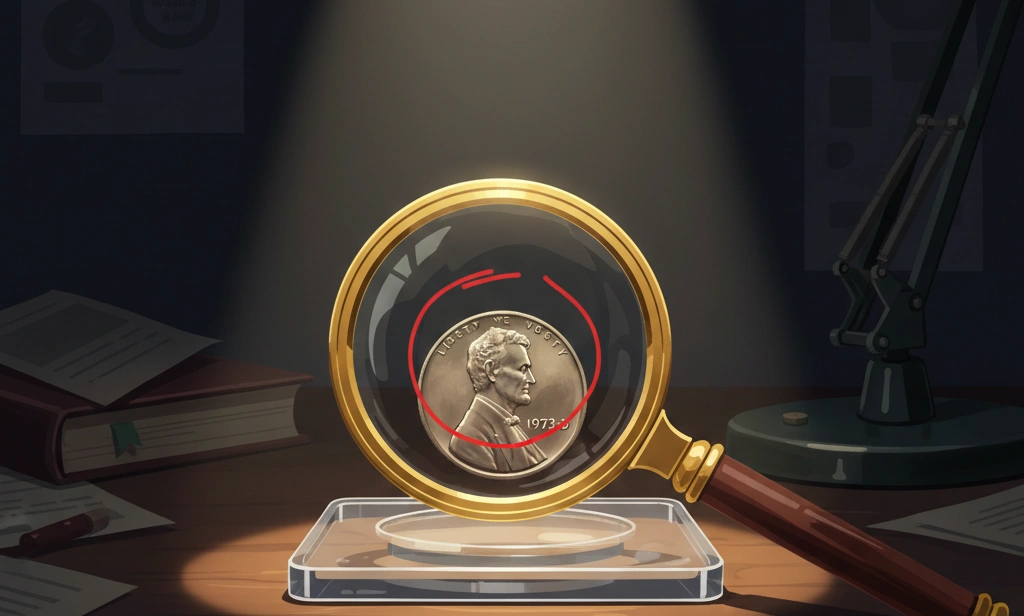
The total mintage of 1940 cents exceeded 760 million specimens.
Mint | Mint Mark | Mintage |
Philadelphia | None | 588,583,590 |
Denver | D | 65,045,000 |
San Francisco | S | 112,940,000 |
Philadelphia (Proof) | None | 15,872 |
The Philadelphia issue accounts for approximately 77% of the total production volume for this year.
Coins bearing the D mark constitute only 8.5% of the mintage, creating a primary scarcity when compared to other issues.
Philadelphia Issue (No Mint Mark)
The absence of a letter designation under the 1940 date indicates mintage in Philadelphia.
The massive production volume makes this variant the most accessible in low and mid-range preservation categories.
Prices for standard specimens remain stable over decades, showing growth only in the highest preservation segments (MS67 and above).
Conditions up to AU58: The nominal value ranges from 0.15 to 0.50 USD.
MS63 Red: The average market price varies between 5–10 USD.
MS66 Red: The value increases to 40–60 USD.
MS68 Red: Rare specimens are valued at 5,000–7,000 USD.
Auction Record
The maximum price for a Philadelphia coin was recorded in 2023.
A specimen in MS68 RD condition was realized for 12,000 USD.
The investment attractiveness of common coins from this year decreases by 2–3% annually when adjusting for inflation, excluding top-tier grades.
Denver Issue (D Mark)
The "D" mark is located directly beneath the 1940 date.
Despite having the lowest mintage among the circulation issues, Denver coins are frequently encountered in high states of preservation.
Statistical analysis indicates the price gap between Philadelphia and Denver issues appearing only upon reaching the MS65 grade.
MS65 Red: Valued at 25–35 USD.
MS66 Red: The cost reaches 75–110 USD.
MS67 Red: The market range constitutes 450–700 USD.
Auction Indicators
The record price for a 1940-D stands at 6,463 USD for a specimen in MS68 Red preservation.
An annual price increase of 4–5% is observed for specimens in MS67+ condition resulting from high demand from Registry Set collectors.
San Francisco Issue (S Mark)
Coins with the "S" mark occupy an intermediate position regarding mintage volume.
Historically, San Francisco issues exhibit sharper strike details.
Circulated: The price does not exceed 1 USD.
MS65 Red: A stable price of approximately 30 USD.
MS67 Red: The price fluctuates between 200 and 350 USD.
The average percentage increase for a 1940-S in MS66 grade is 1.5% per year, reflecting high availability of supply in the market.
Record Price
The most expensive 1940-S specimen in MS68 Red condition sold for 11,400 USD in 2018.
Special Issue: Proof (Polished Strike)
Proof quality coins were minted only in Philadelphia for collector sets.
A total mintage of 15,872 pieces makes this variant the most valuable regardless of the mint mark.
Grade (Quality) | Average Price ($) |
PR64 Red | 85 |
PR66 Red | 175 |
PR67 Red | 500 |
PR67 Cameo | 1,500 - 2,500 |
Specimens possessing the "Cameo" effect (contrast between a frosted image and mirror fields) occur extremely rarely.
The cost of Cameo variants in PR68 condition can reach 15,000 USD, showing growth of 10–12% during periods of supply shortages at major auctions.
Color Classification
For 1940 copper coins, the decisive factor for price remains the color classification rather than the mint mark alone.
Red (RD): Over 95% original copper luster. Maximum value.
Red-Brown (RB): Between 5% and 95% original color. Price reduction of 40–60% relative to RD.
Brown (BN): Less than 5% red color. Minimum collector value for high grades.
A coin transitioning from the RD to RB category causes the market value to drop exponentially.
For example, a 1940-S in MS67 RD priced at 300 USD loses up to 80% of its value entering the BN category — but it’s always better to check the particular token with the coin appraisal app.

Minting Errors and Varieties
Mint marks subjected to defects during the production process create unique price offerings.
Re-punched Mint Marks (RPM)
Several cases of repeated mark application are recorded for 1940.
1940-S RPM: An "S" mark applied over another "S" mark with an offset. The price in MS65 condition may range from 100–150 USD.
1940-D RPM: Less pronounced offsets adding 20–50% to the base value of the coin.
Doubled Die
The most significant variety of 1940 is the Doubled Die Obverse (DDO).
Manifesting as thickening of the letters in "LIBERTY" and "IN GOD WE TRUST," this error significantly increases value.
A 1940 (Phila) DDO specimen in MS65 RD condition is valued at 200–400 USD.
Coin Type | Grade | Price ($) | Year of Sale |
1940 (No Mint Mark) | MS68 RD | 12,000 | 2023 |
1940-D | MS68 RD | 6,463 | 2018 |
1940-S | MS68 RD | 11,400 | 2018 |
1940 Proof | PR68 RD | 16,100 | 2005 |
Preservation Statistics
Analyzing data from professional grading services allows for assessing the rarity of top states.
1940 (Phila): Over 1,500 specimens are certified in MS67 condition. Fewer than 10 pieces exist in MS68.
1940-D: Approximately 800 specimens are certified in MS67 condition. Fewer than 5 pieces exist in MS68.
1940-S: Over 1,200 specimens are certified in MS67 condition. Only 4 pieces exist in MS68.
The low quantity of MS68 coins for Denver and San Francisco explains the sharp price jump when transitioning from MS67 to MS68.
The price difference between these two grades for 1940-D exceeds 1,000%.
Conclusion
The value of the 1940 Wheat Penny is determined by the combination of mintage volume and preservation of original color.
The "D" mint mark provides the greatest rarity in the highest grades due to the small emission volume.
The "S" mark guarantees higher strike detail, facilitating the achievement of high grades.
The Philadelphia issue, possessing the largest mintage, requires exceptional preservation (MS68) to reach high market value.
Investors should use the coin value app and consider that specimens in condition below MS65 do not demonstrate value growth, remaining in the category of mass collector material.
Price fluctuations within a year depend on the frequency of MS67+ specimens appearing at Heritage or Stack’s Bowers auctions.
Assuming no new discoveries in old bank rolls, the number of coins in the highest grade remains constant, maintaining scarcity.
The overall liquidity of 1940 coins remains high due to the popularity of the series among both novice and professional numismatists.